Last Updated: November 21, 2026
Quick Summary
You can fix a bad fade by first diagnosing whether it is a harsh blend line, uneven bulk, or a hairline pushed too high. Blend lines and leftover bulk can be softened at home with clipper-over-comb using one guard length longer than the shortest section, but a fade cut too short or patchy to the skin needs time to grow or a barber.
- Wash and dry hair fully before blending, since wet hair lies flat and hides true length.
- Work down through consecutive guards and never skip more than one guard size at a time.
- If a blend line is still visible after two full passes, stop for the day.
- A patch cut to the skin cannot be fixed with clippers and must grow out.
- If the fade is too short, patchy to the skin, or the hairline is over-cut, see a barber.
Table of Contents
- Why Your Fade Looks Bad: Diagnosing the Problem
- How to Blend an Uneven Fade at Home
- Can a Barber Fix a Bad Fade?
- What to Do With a Bad Haircut That’s Too Short
- How Long Does a Fade Take to Grow Back?
- DIY or Professional Fix: A Decision Guide
- Book a Same-Day Fade Correction at The Cutlery Barbershop
- Frequently Asked Questions
Why Your Fade Looks Bad: Diagnosing the Problem
Most bad fades fail for one of three reasons: a harsh blend line, uneven bulk on the sides, or a hairline that got pushed too high. Before you touch a clipper, figure out which problem you actually have. Fixing the wrong issue is how a salvageable cut turns into a buzz cut.
A frustrated client often arrives ready to shave it all off, when the real problem is a single visible transition line.
Look at your fade in a bathroom mirror with good light. Then check it in a hand mirror from the side. Fades are three-dimensional. What looks clean from the front can look patchy from the side.
Common Fade Failures and What They Look Like
- Harsh line: A visible stripe where one guard length stopped and another began.
- Patchy sides: Light and dark spots from uneven clipper pressure or missed passes.
- Uneven bulk: Hair still thick in one spot while the rest is faded out.
- Ragged hairline: A crooked or over-cut front edge.
- Too-high fade line: The fade starts well above where you asked.
Match your problem to the list above. That diagnosis decides everything that follows.
How to Blend an Uneven Fade at Home
You can blend an uneven fade at home if the problem is a blend line or leftover bulk and you still have length to work with. If the fade line is already too high or a patch is cut to the skin, stop. Clippers cannot add hair back.
Here is the honest version of the at-home fix. It works on minor errors. It will not rescue a fade that has been cut too short.
- Wash and dry the hair fully. Wet hair lies flat and hides the true length.
- Comb the sides up so the hair stands naturally.
- Start one guard length longer than the shortest section of your fade.
- Use clipper-over-comb on the blend zone. The comb lifts hair, the clipper removes what sticks out.
- Work upward in short passes. Never push the clipper straight up into the top.
- Check in a mirror every few passes. Stop while you still have room to correct.
- Finish the edges with a trimmer or straight razor, not the main clipper.
The key is patience, since rushing the blend zone is a common cause of problems.
Step-by-Step Fixes by Fade Problem
General advice only goes so far. Match your diagnosis to the correction below, and stop the moment the problem is resolved rather than continuing to “even it out.”
Visible blend line. Set the clipper to the guard one step longer than the shortest section below the line. Work clipper-over-comb directly on the line in short, upward passes, moving side to side rather than straight up.
Uneven sides. Compare left and right in a hand mirror before cutting. Work only the heavier side. Use the guard that matches the length on the lighter side and remove bulk in the thick zone with clipper-over-comb, checking against the opposite side every few passes.
Too-high fade line. This is not an at-home fix. The line is already above where you wanted it, and every pass removes hair you cannot replace. Book a barber to rebuild the blend around the shortest point, or plan for regrowth.
Patchiness. Small light spots from uneven pressure can sometimes be softened by blending the surrounding hair into the patch with a longer guard and light clipper-over-comb passes. A patch cut to the skin cannot be fixed with clippers.
Crooked or over-cut hairline. Edges need a steady, trained hand. A trimmer in the mirror at home tends to make a crooked line worse because you are working upside down and backward.
Tools, Guard Lengths, and Safety Precautions
You need four things: clippers with numbered guards, a barber comb, a trimmer for edges, and a hand mirror. A spray bottle helps with dampening, not soaking.
| Tool | What It Does | Watch Out |
|---|---|---|
| Clippers + guards | Removes bulk, sets fade lengths | Skipping guard sizes creates harsh lines |
| Barber comb | Lifts hair for clipper-over-comb | A fine comb cuts too aggressively |
| Trimmer | Cleans edges and hairlines | Easy to over-cut a shape-up |
| Hand mirror | Shows the side and back | Skipping this hides patchy spots |
Guard lengths matter more than anything else. Move one guard at a time. Jumping from a #1 to a #3 leaves a line you then have to blend out. A common pattern is to work down through consecutive guards in the blend zone and never skip more than one step at a time.
Safety first: keep the blade cool, never cut over moles or bumps, and clean your tools before and after. Shared or dirty clippers can cause irritation and micro-cuts. The CDC guidance on barbering and salon hygiene is a good plain-language reference for tool cleaning.
Watch out: pressing hard with the clipper digs into the scalp and creates divots. Let the guard do the work with light, even pressure.
Can a Barber Fix a Bad Fade?
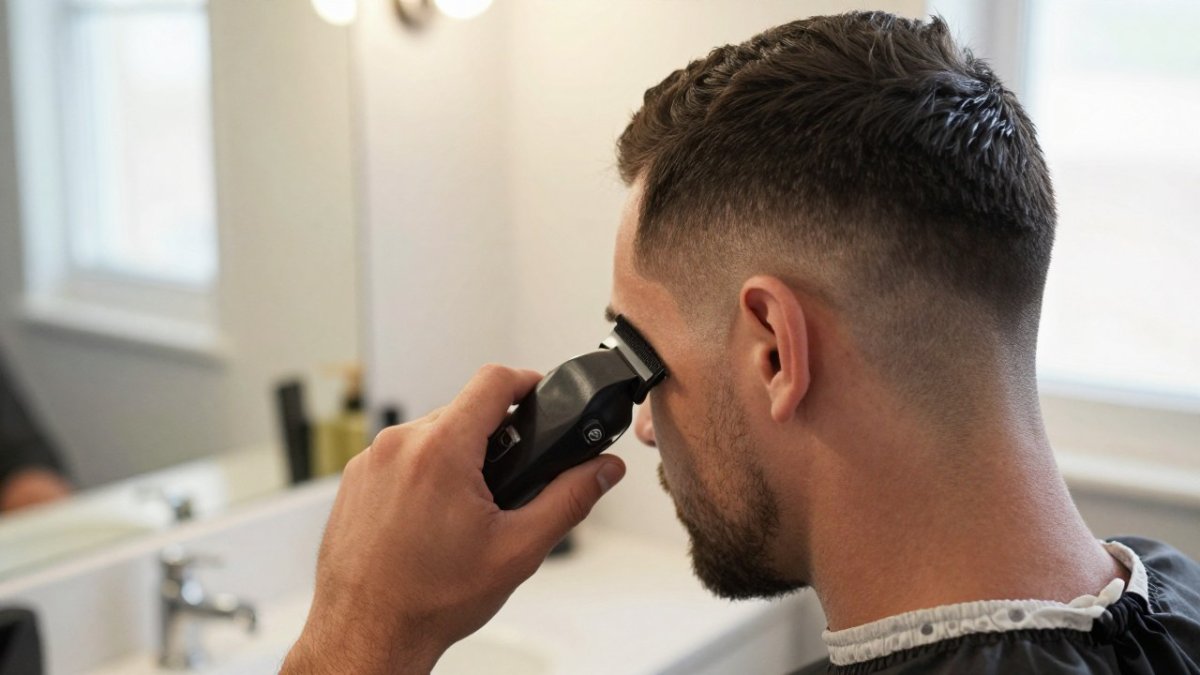
A barber can often correct a bad fade. A skilled barber reads the cut, finds the shortest point, and rebuilds the blend around it. The one thing no barber can do is put back hair that has been cut to the skin.
That is the honest limit. If your fade has a bald patch or a line pushed near the top of the head, the fix is regrowth, not clippers.
What a Correction Costs and When to Ask for a Redo
Pricing depends on how much work the fix requires, so ask for a quote before the clippers start. Current prices are available on The Cutlery Barbershop’s website.
If the original barber made the error, it is reasonable to contact that shop and ask politely about a fix. Keep it simple and specific: name the spot, say what you asked for, and ask whether they can correct it. Each shop sets its own policy, so accept the answer.
How to Explain the Correction to Your Barber
Be specific and skip the apology. Barbers fix bad cuts every day, and a clear description saves everyone time.
- Point to the exact spot: “The line here is too harsh.”
- Name the goal: “I want this blended, not shortened.”
- Set the limit: “Please don’t take the top any shorter.”
- Bring a reference photo if you have one.
- Say what you disliked about the last cut, in plain words.
A good barber will repeat the plan back to you before starting. If they do not, ask them to. That short conversation is the difference between a fix and a second bad fade.
If you want to see who is available before you commit, you can meet the barbers and check each profile. Readers who want a specific chair can look up Jordan B, Rico Q, Aaron Pryer, or Chacha ahead of time.
What to Do With a Bad Haircut That’s Too Short
When a fade is cut too short, stop cutting. The only real fix is time. Clippers cannot restore length, and another pass will only make the gap wider.
What you can do in the meantime:
- Style the top forward to draw attention away from the sides.
- **Use a light styling product to add texture.
- Keep the edges clean with a trimmer so the cut looks intentional, not sloppy.
- Avoid hats for long stretches if they flatten the fade and make it look worse.
- Book a shape-up in a week or two to tidy the hairline while the sides fill in.
A too-short fade often looks different after a little regrowth, so avoid judging it in the first few days.
How Long Does a Fade Take to Grow Back?
How long a fade takes to grow back depends on how short it was cut and how fast your hair grows.
Hair grows at different rates for different people, so treat that window as a guide, not a promise. If you need the cut to look sharp for an event, book a shape-up rather than waiting for a full regrow.
DIY or Professional Fix: A Decision Guide
Use this rule: if the problem is a blend line or leftover bulk and you have length to spare, try the at-home fix. If the fade is too short, patchy to the skin, or the hairline is over-cut, see a barber.
Here is the full breakdown.
| Your Situation | Best Move | Why |
|---|---|---|
| Visible blend line, length remains | At-home blend | Clipper-over-comb can soften it |
| Uneven bulk on the sides | At-home blend | Remove what sticks out, one guard at a time |
| Fade cut too short | Wait and shape up | Clippers cannot add hair |
| Patchy to the skin | See a barber | A pro can hide it with the top and edges |
| Crooked or over-cut hairline | See a barber | Edges need a steady, trained hand |
| Special event this week | See a barber | Same-day fix beats a risky DIY attempt |
One more consideration: a barber consultation can protect what is left of the cut. If you are unsure which column you fall into, that uncertainty is your answer.
Book a Same-Day Fade Correction at The Cutlery Barbershop
A bad fade is fixable more often than people think. The trick is diagnosing the problem first, then choosing the right fix instead of reaching for the clippers in frustration.
At The Cutlery Barbershop, we build every cut around your face shape and how you actually wear your hair. Our team handles precision fades, scissor work, and detailed beard shaping, and we walk you through the plan before the clippers start. Walk-ins are always welcome.
Stop in, show us the spot that bothers you, and we will tell you what can be fixed and what needs time to grow. Get started with The Cutlery Barbershop and leave with a fade that looks deliberate, not damaged.
Frequently Asked Questions
Can a barber fix a bad fade without cutting my hair shorter?
Often, yes. A skilled barber can use clipper-over-comb and scissor work to blend harsh lines and remove uneven bulk without taking the top noticeably shorter. If the fade line is set too high or a patch is cut too close to the skin, some length loss is unavoidable. Bring a reference photo and ask the barber to assess before any clippers touch your head.
How long does it take for a bad fade to grow back?
Hair grows roughly half an inch per month, so bad fades often need a few weeks before a barber has enough length to blend and reshape. A patch cut too close to the skin can take longer to catch up. In the meantime, styling the top with texture and keeping the edges clean makes the grow-out look intentional.
Should I try to fix an uneven fade at home?
Only if the problem is minor, like a small patch or a slightly harsh blend line. Use the guard that matches your existing fade length and cut with a 45-degree angle, removing only what sticks out. If the fade is lopsided, the line is too high, or you see skin where hair should be, stop and see a barber before you make it worse.
What should I tell a barber when asking them to fix a bad fade?
Be specific about what bothers you: the blend line, the height of the fade, or a patchy spot. Bring a reference photo of the fade you want and one of the current problem if you have it. Ask the barber to walk you through the plan before cutting, and mention how short you are willing to go so there are no surprises.
