Last Updated: November 19, 2026
Quick Summary
To find a barber for face shape, first measure your forehead, cheekbones, jawline, and face length at home to identify whether you are oval, round, square, oblong, or heart-shaped. Then vet barbers by checking portfolios for a variety of face shapes, reading reviews for consultation language, and asking how they adjust a cut for your face shape and hairline.
- You can identify your face shape in about five minutes with a mirror, soft tape measure, and phone camera.
- Round faces should add height with a quiff or pompadour and keep the sides tight.
- Look for portfolios showing front, side, and back views plus close-ups of fades and tapers.
- Ask whether the barber offers a consultation before the first cut or includes it in the appointment.
- Bring your measurements, two or three reference photos, and one sentence about your routine to the chair.
Table of Contents
- Why Your Face Shape Should Drive the Barber You Pick
- How to Identify Your Face Shape Before You Book
- How to Choose a Men’s Haircut for Your Face Shape
- How to Choose the Right Barber for That Cut
- What to Ask a Barber for a Haircut in Your Consultation
- How to Find a Barber for Your Face Shape Quiz and Skip the Guesswork
- When Your Barber’s Recommendation Doesn’t Match What You Want
- Book Your Face-Shape Consultation at The Cutlery Barbershop
- Frequently Asked Questions
Why Your Face Shape Should Drive the Barber You Pick
Finding a barber for face shape starts with geometry, not guesswork. Your face shape decides which lines to build up and which to soften, and a barber who reads it well can make a round face look sharper or a long face look balanced.
So how do you find a barber for your face shape? You learn your proportions first, then you pick a barber who can translate them into a cut. This guide walks you through all seven steps, from measuring your face at home to giving feedback after the chair spins around.
How to Identify Your Face Shape Before You Book
You can identify your face shape in about five minutes with a mirror, a soft tape measure, and a phone camera. Pull your hair back, stand in even light, and look straight ahead. No smiling and no tilting your chin.
Measure Forehead Width, Cheekbones, Jawline, and Face Length
Write down four numbers:
- Forehead width: across the widest part, temple to temple
- Cheekbone width: across the highest point of each cheek
- Jawline width: from the corner of one jaw to the other
- Face length: hairline to the bottom of your chin
Compare them. Which is widest? Which is longest? Those two answers do most of the work.
Match Your Measurements to Oval, Round, Square, Oblong, or Heart-Shaped
| Face Shape | What the Measurements Show | Goal for the Cut |
|---|---|---|
| Oval | Length about 1.5x width, soft jaw | Keep it balanced, most cuts work |
| Round | Width and length close, full cheeks | Add height, keep sides tight |
| Square | Forehead, cheeks, jaw nearly equal | Soften corners, add texture up top |
| Oblong | Noticeably longer than wide | Add width, avoid extra height |
| Heart-shaped | Wide forehead, narrow chin | Balance the forehead, add volume low |
How to Choose a Men’s Haircut for Your Face Shape
Match the cut to the goal in that table, and the choice gets simple. For a round face, a quiff or pompadour with tight faded sides adds height and slims the width. Square faces suit a crew cut or textured fringe that softens a strong jaw. Oblong faces do well with a side part and some width through the sides, not a tall style stacked on top. Heart-shaped faces look balanced with a taper and moderate volume around the temples.
Oval faces are the lucky ones. Most styles suit them, so pick based on hair type and how much styling you want each morning.
How to Choose the Right Barber for That Cut
Knowing your face shape means nothing if your barber for face shape ignores it. The query is about finding a barber, not just picking a haircut, so treat the search as a two-part vetting process: first confirm the barber has relevant experience with your face shape and hair type, then confirm they communicate in a way that keeps you in control of the final result.
Start by browsing our team of barbers so you can match a barber’s portfolio to the cut you want. But do not stop at the shop’s own gallery. Look for independent evidence of their work and their process.
Assess Portfolios Like a Hiring Manager
A portfolio is only useful if you know what to look for. A strong barber portfolio generally shows three things:
- Variety of face shapes: Look for clients with round, square, oblong, and heart-shaped faces, not just one model-like jawline. A barber who only posts oval-faced clients may not have practiced the adjustments other shapes need.
- Consistent angles: Front, side, and back views of the same cut. A single front-facing photo hides the fade blend, the neckline, and the crown, the areas where face-shape adjustments actually show up.
- Close-ups of transitions: Fades, tapers, and beard lines are where technical skill is visible. Blurry or distant shots are a red flag because they hide the detail you are paying for.
Watch out: A portfolio full of stock images or heavily filtered photos is a sign the barber is selling a look, not demonstrating repeatable technique on real clients.
Read Reviews for Process, Not Just Praise
Five-star reviews that say “great cut” tell you little. Search reviews for language about consultation and adjustment: phrases like “asked about my routine,” “explained why he chose that length,” or “fixed the sides when I asked.” Those comments signal a barber who thinks about face shape and hair characteristics rather than running a standard menu. Also note whether reviewers mention their hair type or face shape, if several reviewers with your hair texture praise the same barber, that is stronger evidence than a generic rating.
Ask Questions That Reveal Face-Shape Expertise
Call or walk in and ask:
- Do you cut my hair type and texture regularly?
- Can I see photos of fades and tapers you’ve done on clients with my face shape?
- How do you adjust a cut for face shape and hairline?
- What does maintenance look like between visits, and how often will I need to come back?
- Do you offer a consultation before the first cut, or is it included in the appointment?
A barber who answers with specifics, naming the adjustments they make for a round face or a receding hairline, is more likely to deliver a cut that fits you. A barber who gives one-word answers or deflects to “I’ll know when I see you” is a gamble.
Match Barber Expertise to Your Hair Characteristics
Face shape alone does not determine a workable cut. Hair texture, density, growth patterns, and hairline all constrain what a barber can do. A barber who specializes in straight, dense hair may struggle with fine or curly hair, and vice versa. Ask directly: “Have you worked with hair like mine?” If the answer is vague, ask for a photo of a similar client. This is the gap most face-shape guides miss, they tell you which cut suits your geometry but not whether the barber can execute it on your hair.
Check Practical Fit: Budget, Availability, and Upkeep
A barber who is perfect on paper but books three weeks out or charges more than you want to spend every two weeks is not a practical choice. Ask about:
- Price per cut and expected frequency: Ask for current pricing, since it depends on the service and schedule. A tight fade may need touch-ups more often than a scissor cut. Factor the annual cost, not just the single visit.
- Appointment availability: Can you get a recurring slot that fits your schedule? Walk-in policies matter if your routine is unpredictable.
- Travel distance: A 45-minute drive each way adds hours to your month. A nearby barber who understands your face shape is often the better long-term choice.
Many people try one visit with a new barber before committing to a recurring schedule, since that visit shows you their process.
What to Ask a Barber for a Haircut in Your Consultation
Bring three things to the chair: your measurements, two or three reference photos, and one sentence about your routine. Then say it plainly: “I have a round face and want height on top with tight sides. I style for two minutes in the morning.”
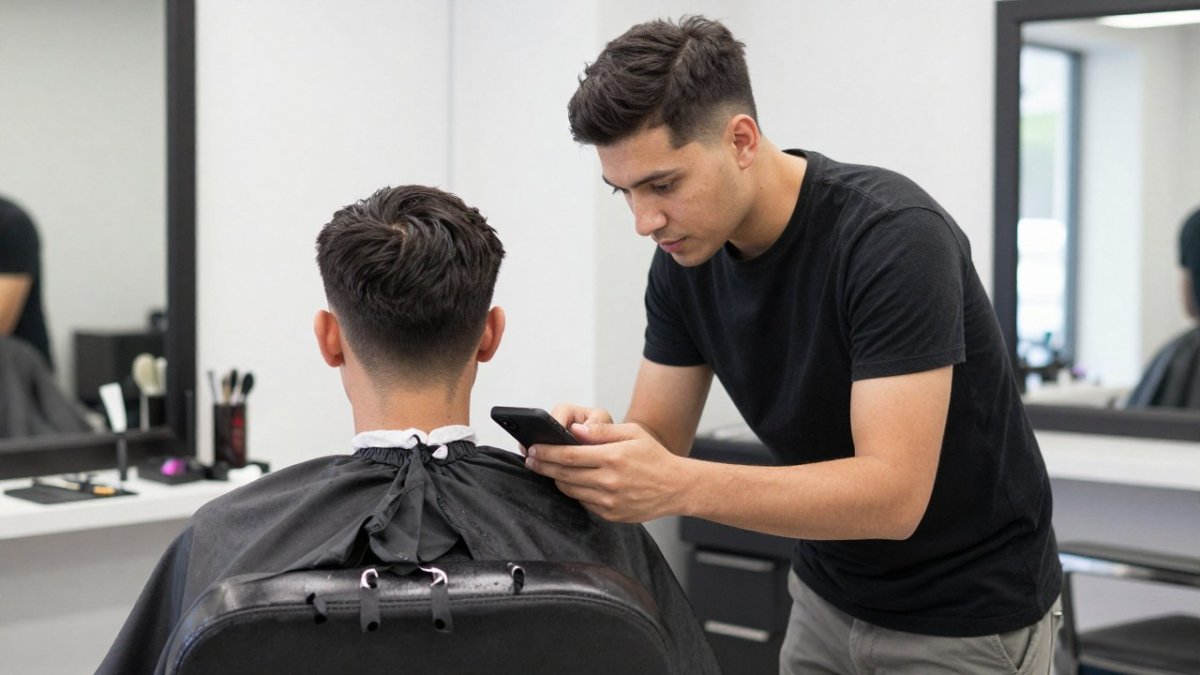
A good barber will repeat the plan back to you and flag anything that won’t work with your hairline or growth pattern. Listen for that. It means they are thinking about your head, not just running the clippers.
How to Find a Barber for Your Face Shape Quiz and Skip the Guesswork
Online quizzes can point you in the right direction, but treat them as a starting hint, not a final answer. A quiz cannot feel your hair density, see your growth pattern, or spot a cowlick at the crown. Use it to narrow the field, then confirm with a tape measure and a barber’s eye.
If a quiz tells you “oval” but your jaw is clearly square, trust the mirror. Barbers see faces all day and will tell you the truth in thirty seconds.
When Your Barber’s Recommendation Doesn’t Match What You Want
Speak up before the first cut, not after. If your barber suggests something different from your plan, ask why. A good reason sounds like “your hairline recedes at the temples, so this fringe will cover it better.” A weak reason sounds like “this is just how I do it.”
You can also compromise. Keep the length you want and let the barber adjust the sides or the blend. Most disagreements come down to one detail, not the whole style.
Book Your Face-Shape Consultation at The Cutlery Barbershop
A haircut that fits your face shape should not be a gamble. At The Cutlery Barbershop, we aim to understand your style and what you want from each visit.
Get started with The Cutlery Barbershop and leave with a cut that fits your face, not just the trend of the week.
Finding a barber who reads your face shape takes a little homework up front, but it pays off at every visit after. Measure your face, match the cut to your proportions, and ask the right questions before the clippers come out.
Frequently Asked Questions
Can a barber help me identify my face shape?
Yes. A trained barber looks at your forehead width, cheekbones, jawline, and overall face length in the mirror and can usually name your shape in under a minute. That said, measure at home first so you walk in with your own read. Comparing your measurements to the barber’s assessment gives you a shared starting point and makes the consultation faster. If the two readings differ, ask the barber to explain what they see, since hairline and beard growth can shift how a shape reads.
What photos should I bring to a barber for a haircut consultation?
Bring two or three photos of cuts you like plus one or two of cuts you dislike. Look for models with a similar face shape, hair texture, and density to yours, since a style that works on thick, straight hair can fall flat on fine or curly hair. Save the photos to your phone rather than describing them. A barber can translate a reference photo into your hair type far more accurately than a verbal description of the same style.
Should I choose a barber based on my face shape or my hair type?
Both matter, but hair type sets the hard limits. Face shape tells the barber what proportions to balance, while texture, density, growth patterns, and hairline decide which cuts will actually hold that shape. A great barber for face shape will still steer you away from a style your cowlick or thinning crown cannot support. Ask about experience with your specific hair type when you vet a barber, then let the face-shape discussion shape the details.
How do I explain the haircut I want to a barber without the wrong result?
Use photos, name the length on top and on the sides in inches, and describe how you style it day to day. Point to where you want weight removed and where you want it kept. Ask the barber to repeat the plan back before the clippers start. If you have had a bad cut before, say what went wrong so it does not repeat. A barber who takes time to confirm the plan before cutting is showing you exactly how the appointment will go.
